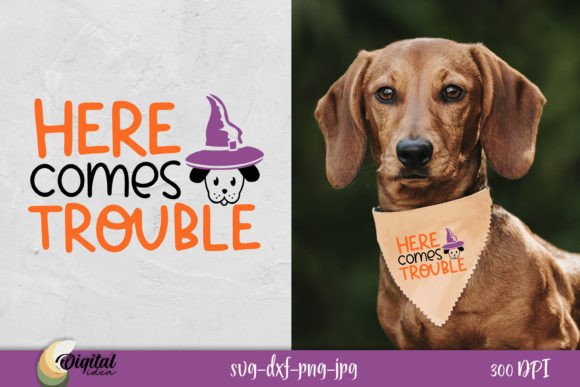
Here Comes Trouble: A Designer's Review for Real Embroidery Projects
When I first opened the folder labeled Here Comes Trouble, I didn't just see a cute dog quote; I saw a potential bestseller. As someone who has spent years turning digital files into tangible, stitched products, my initial reaction is always about execution. Will this design hold up on a mass-produced tote bag? Will it look professional on a boutique baby onesie? The answer depends entirely on how well the file translates from screen to fabric.
This machine embroidery design carries a playful energy that immediately suggests specific use cases. It isn't the kind of abstract art you would hang in a sterile office or place on a corporate polo shirt. Instead, Here Comes Trouble belongs in spaces where personality is the main selling point. It screams casual wear, handmade gifts, and creative small business merchandise. Before I committed to using it in a client project, I had to run through a mental checklist of how the layout interacts with different fabrics and stitch types.
The First Stitch: Visual Personality and Layout
The visual personality of Here Comes Trouble is its strongest asset. The typography appears bold enough to be legible but retains a whimsical charm that fits the theme perfectly. For an embroidery designer, the balance between lettering and any accompanying graphics is critical. If the text is too thin, it will disappear under heavy thread coverage. If the graphic elements are too dense, they can create puckering issues on lighter fabrics.
In terms of mood, this design creates an instant connection. It feels like a personalized gift that acknowledges the chaotic joy of pet ownership. When I imagine this on a finished product, I picture a mother's apron in a home kitchen or a patch on a denim jacket. The layout seems versatile enough to work as a central chest logo on a sweatshirt or a focal point on a pillow cover. However, the "funny" aspect means it requires a specific type of audience. It works brilliantly for Etsy sellers targeting dog lovers, craft fair attendees looking for unique souvenirs, or boutique owners stocking seasonal holiday items.
Real-World Application: From Scrap to Sale
Let's talk about a real scenario. Imagine you are preparing for a local holiday market. You have a stack of plain canvas tote bags and some soft fleece blankets ready for customization. You decide to use Here Comes Trouble because it hits the perfect note of humor and warmth. The goal is to create a limited edition item that customers will want to snap up immediately.
On a canvas tote bag, the design would likely perform very well. Canvas has a sturdy texture that supports fill stitches without distorting easily. The contrast between the natural canvas color and dark thread (or vice versa) would make the quote pop. This is exactly the kind of embroidery project that adds value to a basic product, turning a $5 bag into a $20 boutique item. The design acts as a conversation starter, which is vital for Etsy sellers and small shop owners trying to differentiate their brand.
I also considered using this design on baby clothing. A onesie embroidered with Here Comes Trouble could be a hilarious and memorable gift for a new parent with a puppy. The key here is thread selection. You would need to choose soft, non-abrasive threads to ensure comfort against a baby's skin. The design's humor makes it a perfect personalized gift, but the stitching must be clean to maintain the high-end feel parents expect for their children.
For custom apparel like hoodies or t-shirts, the design offers great branding potential. Small businesses often struggle to find logos that aren't generic. This file provides a unique voice. Whether you are making merchandise for a dog training class or a local animal shelter fundraiser, Here Comes Trouble serves as a strong design asset. It conveys approachability and fun, traits that resonate deeply with modern consumers.
Where to Exercise Caution
Despite its strengths, no design is universal. There are specific scenarios where Here Comes Trouble might require extra attention or simply shouldn't be used. If you are working with a very small hoop size, such as one designed for a hat cuff or a tiny accessory, you must evaluate the detail level carefully. Complex curves or fine lines in the lettering can become muddy when scaled down.
Fabric choice is another critical factor. Stretchy knits, like those found in many t-shirts or leggings, can distort the design if not stabilized properly. Without the right stabilizer, the tension of the machine pulling the fabric can cause the words to wobble or the image to warp. Similarly, textured fabrics like heavy wool or boucle can hide the details of the embroidery, making the design look flat or lost. In these cases, a satin stitch might not provide enough definition compared to a fill stitch.
Dense stitch areas are also a consideration. If the design includes large blocks of solid color, you risk creating a stiff area on the garment that doesn't drape well. This is particularly important for embroidered patches intended to be sewn onto jackets or bags. If the backing is too thick, the patch won't lay flat. Always check the stitch density in your software before sending the file to the machine.
Technical Notes for the Professional Maker
To ensure the highest quality finished product, there are several practical steps every designer should take. First, always test the design on scrap fabric that matches the final material. This allows you to adjust thread tension and stabilizer choices before committing to the actual product. You need to verify that the thread colors chosen provide sufficient contrast against the background fabric.
Inspecting the small details is non-negotiable. Zoom in on the digital preview and look for any tiny corners or sharp angles that might break during stitching. Sometimes, what looks good on a monitor turns out to be problematic on the hoop. Testing the design in black and white mockups can also help you visualize how the density will translate to different lighting conditions.
Licensing is perhaps the most overlooked aspect of selling craft business items. Even though the file comes in multiple formats including SVG, DXF, EPS, PDF, JPEG, and PNG, you must confirm the terms of use. Can you sell the physical items made with this design? Are there limits on the number of units? Confirming these details protects your reputation and ensures you are operating legally.
Finally, consider the washability of the project. Items like kitchen towels or aprons undergo frequent washing. The design needs to be robust enough to withstand repeated cycles without fraying or losing its shape. Using proper stabilizer and securing the edges of the design can significantly extend the life of the handmade product.
In conclusion, Here Comes Trouble is more than just a funny dog quote; it is a versatile tool for creative entrepreneurs. When handled with care and technical precision, it can elevate simple goods into memorable keepsakes. Whether you are a hobbyist making gifts for friends or a professional apparel decorator building a brand, this design offers a blend of charm and utility that is hard to beat. Just remember to respect the limitations of the medium, and the results will speak for themselves.